

Capacity planning software for teams, based on real time data
Toggl replaces capacity assumptions with data on time, availability, and workloads, so you can spot conflicts early and prevent burnout.

Visual capacity planning
Team availability and workload tracking
Automated time tracking built in
PTO & public holidays
Your capacity planning tool should be visual and flexible
Calendars only show meetings. Spreadsheets show whatever someone last updated. Neither shows whether a person has four hours free next Thursday, nor reflects how long similar work has actually taken in the past. Teams overcommit because they don't see the full story. Toggl prevents that.

Real capacity, not assumptions
Toggl accounts for time off, part-time schedules, and existing project commitments. You see who is genuinely free before you assign them to anything, not who looks free on paper — calculated from each person's work hours, task estimates, logged time off, public holidays, and connected calendar events.
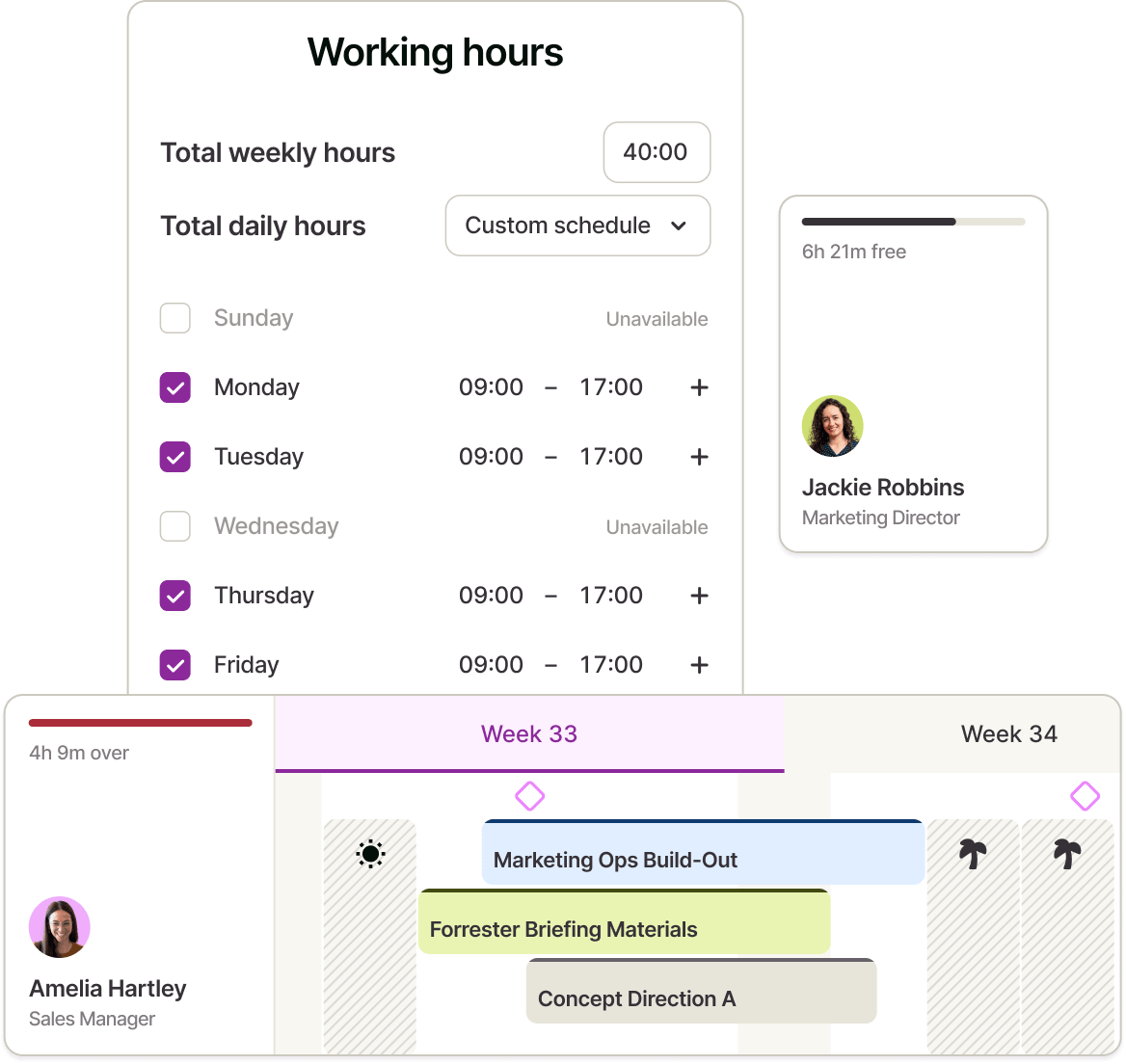

Confident team capacity planning at any scale
Plan from next week to next quarter. Zoom the timeline out to spot where capacity is going to tighten, and make decisions on new work or headcount while you still have time to act. Adjust by dragging — no formula updates, no shared-spreadsheet version conflicts.
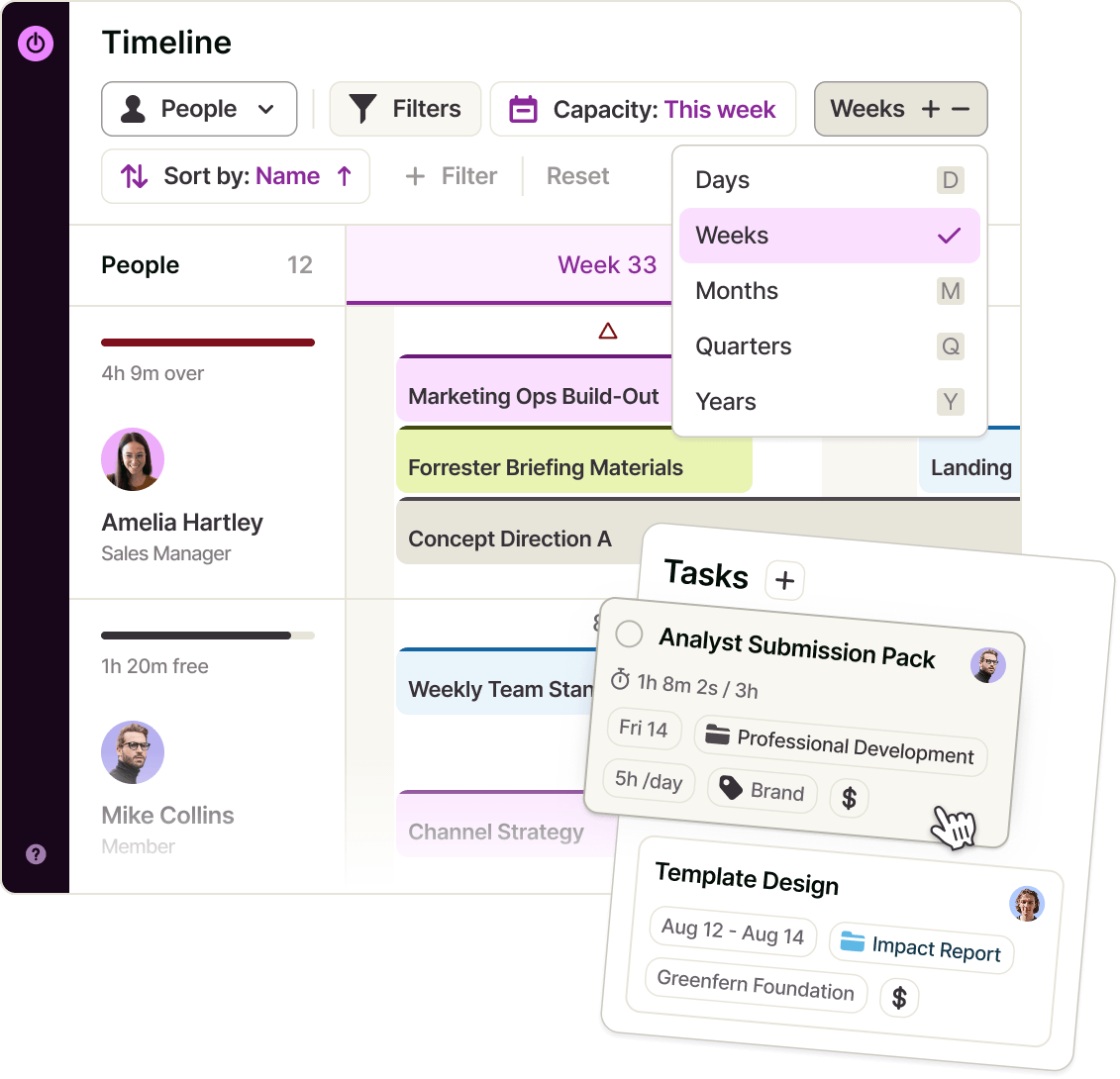

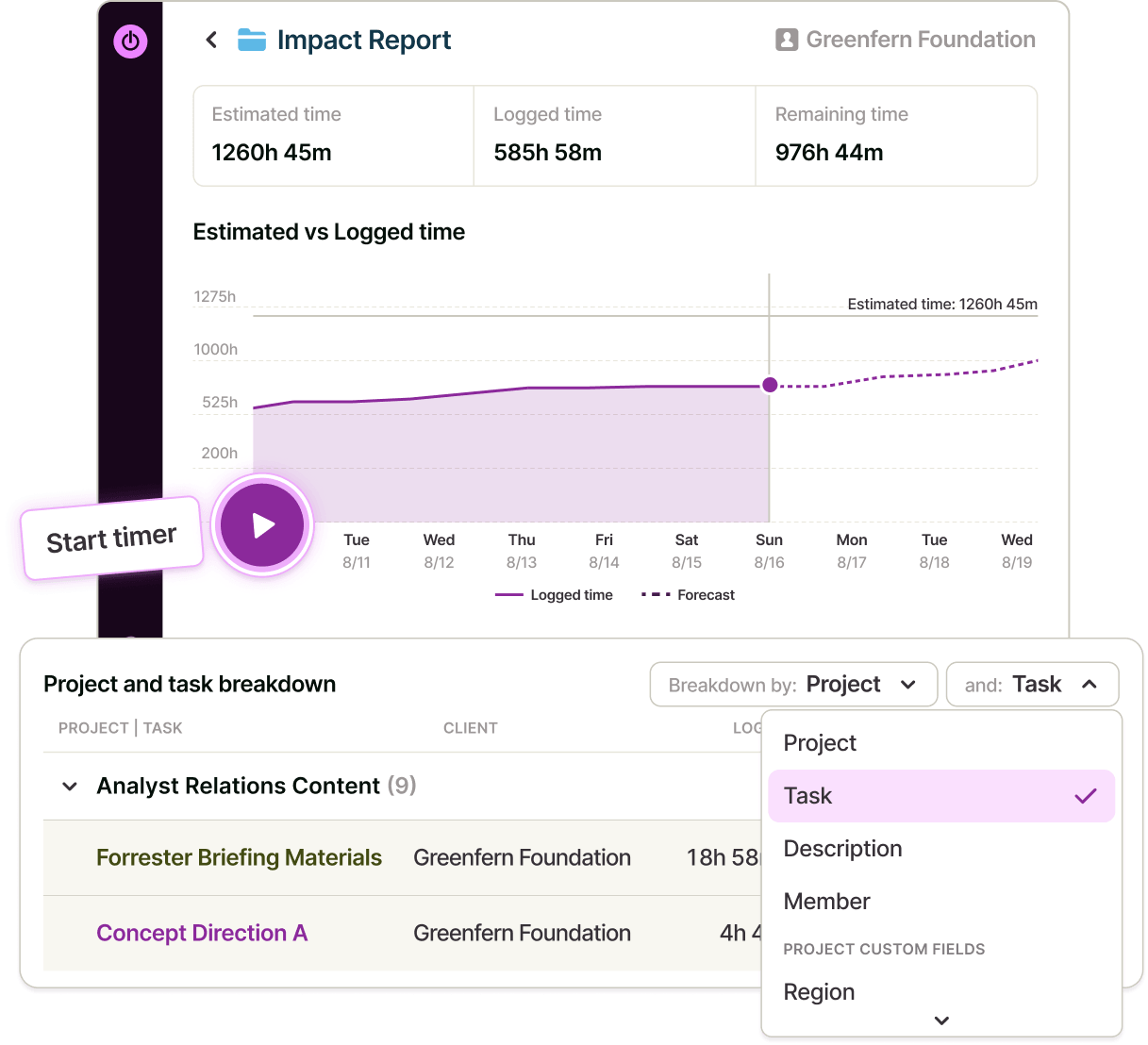
Planning grounded in actual time data
Capacity planning is built on a foundation of time tracking. Compare your estimates against the hours you've actually tracked, so every new estimate is grounded in evidence — and every plan reflects how long similar work has really taken before.

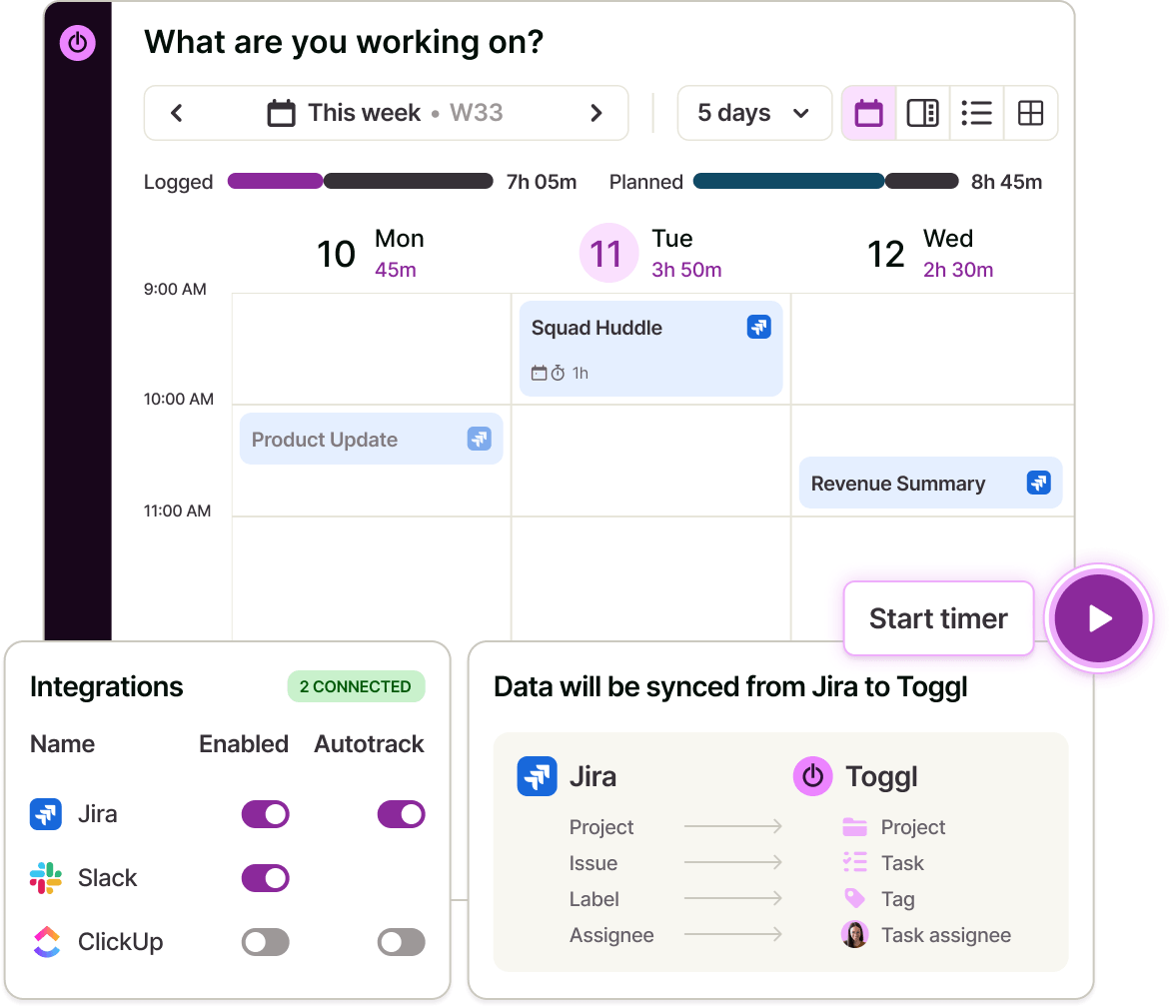
Integrations with your everyday tools
Sync data via native integrations for project management tools like Asana and Jira, and Google or Outlook calendars — so scheduled meetings and events show up on the timeline without anyone re-entering them.

Sign up for free. No credit card required.




Capacity planning software features
Everything you need to plan around real availability.
Visual timeline, grouped your way
Group by people, project, or tags, and zoom from week to quarter depending on your planning horizon.
Drag to schedule
Keep unplanned tasks in a dedicated sidebar and drag any of them onto the timeline the moment you're ready to schedule it.
Capacity that accounts for real life
Calculated from each person's work hours, task estimates, logged time off, public holidays, and connected calendar events — not tasks stacked on a blank week.
Workload report
See hours logged against each person's capacity for the week, with overtime flagged the moment someone goes over.
Utilization report
See what percentage of capacity is going to billable work, tracked against a target you set yourself.
Time off and holidays, handled automatically
Approved time off and detected public holidays both update capacity the moment they're entered — no manual adjustment.
How does capacity planning work in Toggl?

Set work hours for your team
Choose no schedule, a standard 8-hour day, or a custom pattern per person — admins can set this for the whole team.
Add dates and estimates to tasks
Tasks need a start and end date to appear on the timeline; an hour estimate is what feeds the capacity calculation.
Schedule from the Unplanned Tasks sidebar
Drag tasks onto the timeline when you're ready to commit to a date.
Let time off and holidays factor in automatically
Approved leave and detected public holidays reduce available capacity without any manual update.

Check Workload and Utilization reports
See who's over capacity in hours, and who's under their billable target in percentage terms.
Zoom out before you commit to new work
Check the quarter view to see where capacity is going to tighten before you say yes to the next project.
FAQs